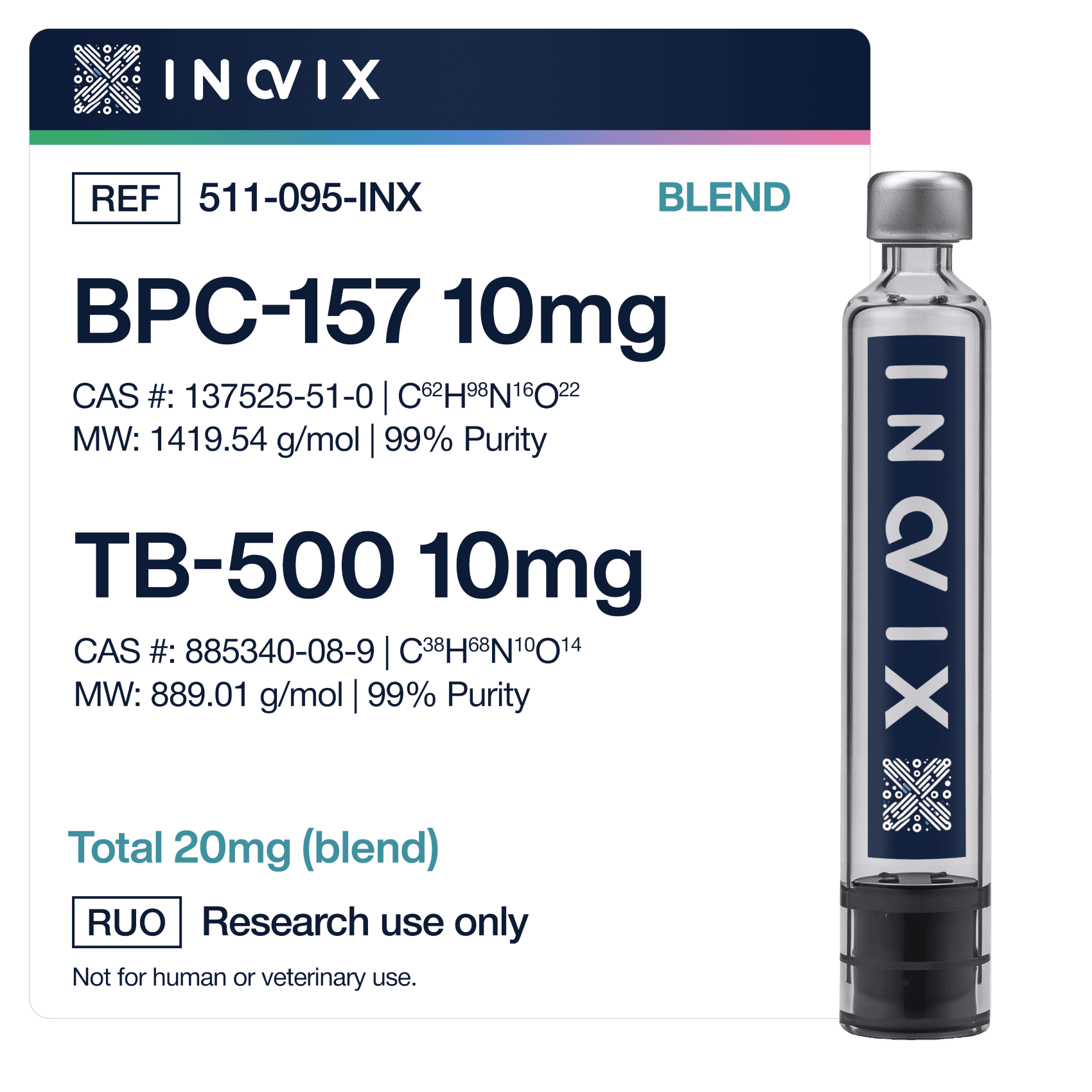
BPC-157 + TB-500 Blend: Overview
BPC-157 and TB-500 are frequently paired in repair-focused peptide research because their mechanisms are biologically complementary.
BPC-157 is centered on cytoprotection, vascular signaling, NO-system modulation, VEGF/VEGFR2-linked angiogenesis, fibroblast migration, collagen organization, epithelial repair, and protection against ischemia-reperfusion injury. [3–17]
TB-500 is centered on the LKKTETQ active region of thymosin β4, with research relevance to actin dynamics, cell migration, angiogenesis, keratinocyte and endothelial movement, wound closure, tissue remodeling, and regeneration-associated signaling. [18–36]
The blend is therefore designed around two major phases of tissue recovery:
1. Stabilize and protect the injured microenvironment
BPC-157 supports cytoprotection, blood-flow restoration, vascular signaling, epithelial integrity, and inflammatory-stress resistance.
2. Mobilize repair and remodeling
TB-500 supports cell migration, actin reorganization, angiogenesis, epithelial movement, and tissue remodeling.
Together, this creates a research blend with a strong profile for injury-site repair, soft-tissue remodeling, vascular support, and regenerative recovery biology.
BPC-157 + TB-500 Blend: Structure and Composition
This blend contains two distinct peptides. The blend itself does not have a single molecular formula or molecular weight; each active peptide should be identified individually.
BPC-157
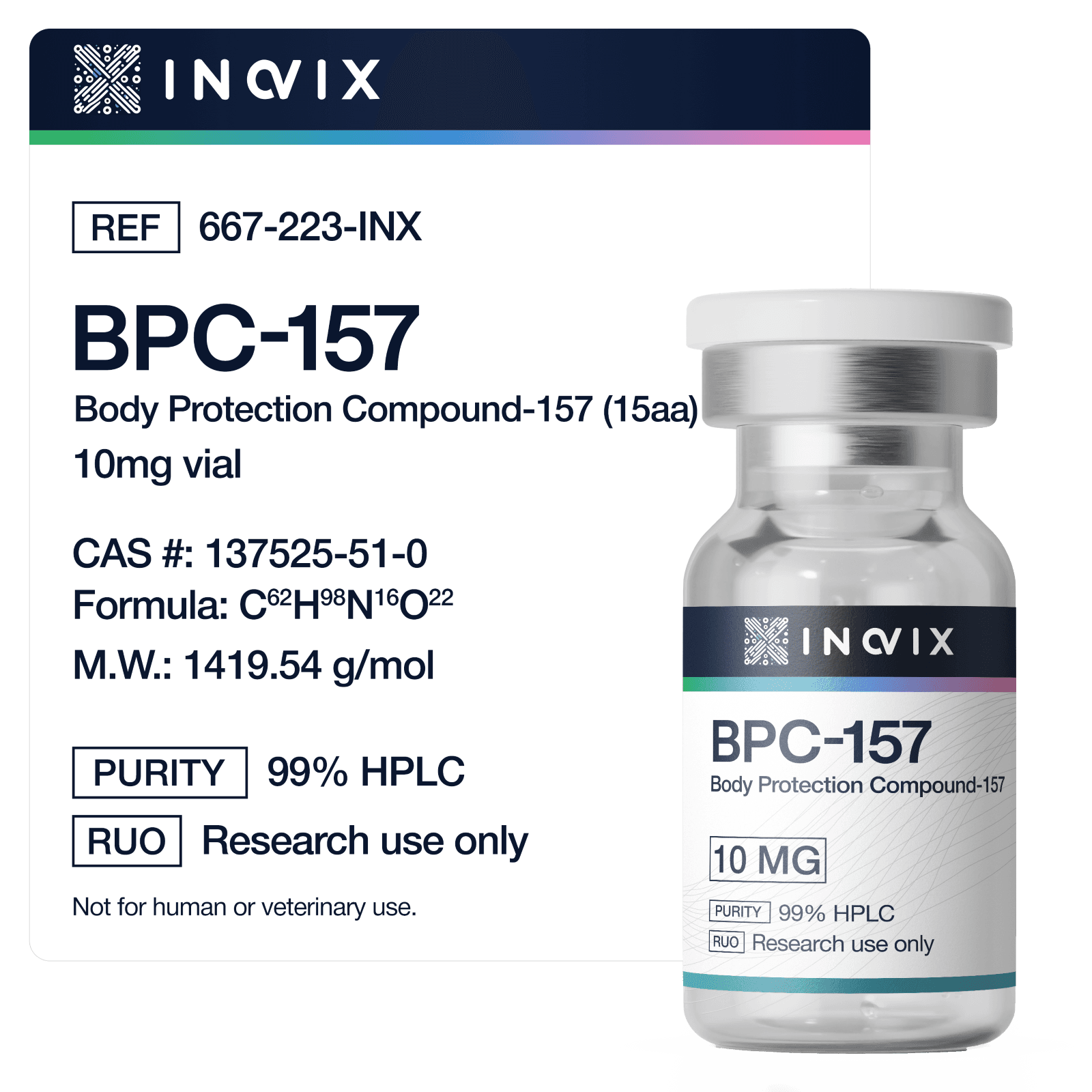
BPC-157 is a 15-amino-acid pentadecapeptide with the sequence Gly-Glu-Pro-Pro-Pro-Gly-Lys-Pro-Ala-Asp-Asp-Ala-Gly-Leu-Val. It is also known as Body Protection Compound-157, bepecin, or PL 14736. [1,3]
CAS No.: 137525-51-0
Molecular Formula: C62H98N16O22
Molecular Weight: 1419.54 g/mol
Length: 15 AA
Sequence: Gly-Glu-Pro-Pro-Pro-Gly-Lys-Pro-Ala-Asp-Asp-Ala-Gly-Leu-Val
Sequence Shortening: GEPPPGKPADDAGLV
Synonyms: BPC-157; Body Protection Compound-157; Bepecin; PL 14736
Solubility is form-dependent. BPC-157 is generally described as aqueous-compatible, with water or saline solubility depending on salt form, counterion, pH, and batch conditions. Final solubility and reconstitution conditions should follow the exact batch COA. [1,3]

Source: PubChem. BPC-157 compound entry, 2D structure image, CID 9941957.
TB-500
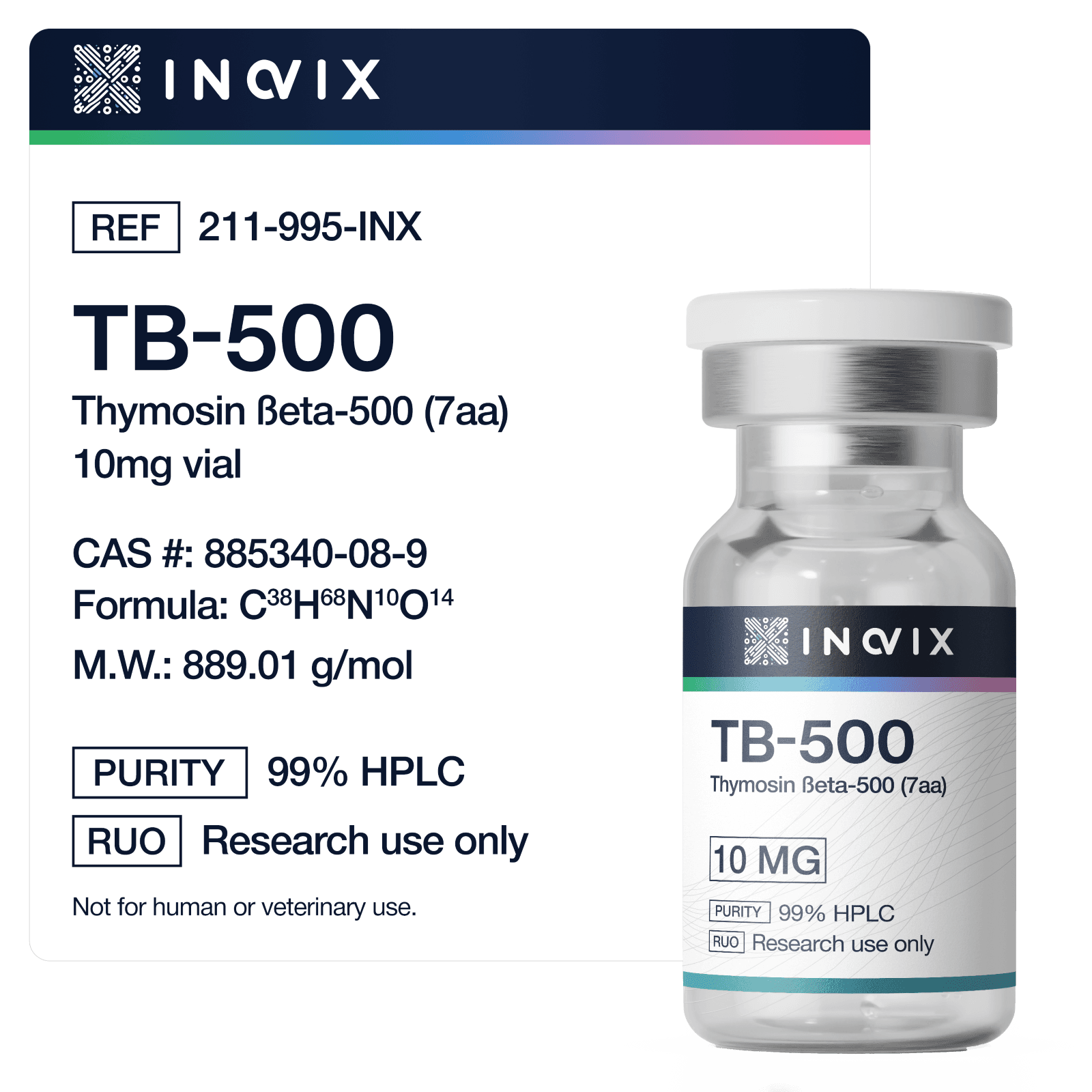
TB-500 is the synthetic N-terminal acetylated 17–23 fragment associated with the active region of thymosin β4. The commonly referenced TB-500 sequence is Ac-Leu-Lys-Lys-Thr-Glu-Thr-Gln, abbreviated Ac-LKKTETQ. [2,18,19]
CAS No.: 885340-08-9
Molecular Formula: C38H68N10O14
Molecular Weight: 889.01 g/mol
Length: 7 AA
Sequence: Ac-Leu-Lys-Lys-Thr-Glu-Thr-Gln
Sequence Shortening: Ac-LKKTETQ
Synonyms: TB-500; Ac-LKKTETQ; N-acetylated thymosin β4 17–23 fragment
TB-500 is structurally distinct from full-length thymosin β4, which is a 43-amino-acid endogenous peptide. TB-500 represents the compact synthetic active-domain peptide platform centered on the LKKTETQ region. [18,19]
Solubility is form-dependent. TB-500 is commonly handled as a lyophilized research peptide, with aqueous solubility influenced by acetate/TFA/free-base form, peptide purity, pH, and batch conditions. Final solubility and reconstitution specifications should follow the exact batch COA. [2]

Source: PubChem. TB-500 / UNII-QHK6Z47GTG compound entry, 2D structure image, CID 62707662.
Blend Mechanistic Architecture
The BPC-157 + TB-500 blend is designed around two interconnected biological axes: vascular-cytoprotective repair and cell-migration-driven remodeling.
BPC-157 Axis
BPC-157 supports:
Cytoprotection
Protection of cells and tissues under chemical, ischemic, inflammatory, and traumatic stress.
Angiogenesis and blood-flow recovery
Research links BPC-157 to VEGFR2 activation, vessel recruitment, collateral circulation, and restoration of blood flow in occlusion models.
Nitric oxide-system modulation
BPC-157 interacts with NO-related systems, supporting vascular tone, endothelial function, and tissue perfusion.
Fibroblast and collagen organization
Repair models repeatedly connect BPC-157 with granulation, re-epithelialization, collagen deposition, and organized tissue restoration.
Epithelial and mucosal repair
BPC-157 is extensively studied in gastric, intestinal, fistula, perforation, and epithelial injury models.
TB-500 Axis
TB-500 supports:
Actin-linked cell movement
The thymosin β4 platform is heavily associated with actin binding, cytoskeletal reorganization, and cellular motility.
Keratinocyte, endothelial, and progenitor migration
Migration is central to epithelial closure, angiogenesis, wound healing, and remodeling.
Angiogenesis
Thymosin β4 and its active region are connected to endothelial migration, vessel formation, and pro-angiogenic repair.
Tissue remodeling and anti-fibrotic balance
Thymosin β4 research includes wound healing, reduced scar formation, corneal repair, cardiac remodeling, and inflammation-resolution pathways.
Regenerative signaling
The broader thymosin β4 platform intersects with PI3K/Akt/eNOS, Notch, TGF-β, Wnt/β-catenin, and inflammatory signaling.
Together, the blend targets both the repair environment and the mobile cellular machinery needed for tissue regeneration.
BPC-157: Stable Gastric Pentadecapeptide Platform
BPC-157 is often described as a stable gastric pentadecapeptide because it was developed from the body protection compound concept associated with gastric cytoprotection. Its sequence is resistant and stable in gastric juice, and its research profile extends far beyond the gastrointestinal tract. [3,4]
The peptide has been investigated in models of:
Skin wounds and burns
Accelerated repair, improved re-epithelialization, collagen deposition, and vascularization.
Gastrointestinal injury
Ulcer, colitis, fistula, perforation, intestinal injury, and anastomotic healing.
Tendon and ligament damage
Fibroblast outgrowth, collagen organization, improved biomechanical and histological outcomes.
Muscle injury
Crush, transection, denervation, and myotendinous-junction models.
Vascular occlusion and ischemia-reperfusion
Collateral vessel recruitment, blood-flow restoration, and protection of downstream organs.
Nerve and spinal-cord injury
Functional recovery, tissue preservation, and neural repair signaling.
Retinal ischemia
Retinal thickness preservation, fundus recovery, and structural rescue in L-NAME models.
This breadth makes BPC-157 the cytoprotective and vascular-recovery anchor of the blend. [3–17]
BPC-157: Wound Healing, Burns, and Skin Repair
BPC-157 has a strong wound-healing literature. In skin injury and burn models, BPC-157 is associated with improved healing kinetics, reduced edema, reduced inflammatory-cell burden, improved re-epithelialization, improved collagen deposition, blood-vessel formation, and better preservation of skin structures. [3,5,6]
The 2021 Frontiers review summarizes a wide range of wound-healing models, including burns, excisional wounds, diabetic wounds, fistulas, perforation, tendon, ligament, muscle, and nerve injury. This review is one of the most useful sources for understanding BPC-157 as a broad tissue-repair peptide rather than a single-tissue compound. [3]

Source: Seiwerth S, Milavic M, Vukojevic J, et al. Stable Gastric Pentadecapeptide BPC 157 and Wound Healing. Frontiers in Pharmacology. 2021. Figure 1: burn skin lesions and BPC-157 therapy effects.
BPC-157 has also been studied in alkali-burn skin injury. In that model, topical BPC-157 accelerated wound closure, promoted granulation-tissue formation, supported re-epithelialization, improved dermal remodeling, and increased collagen deposition. Mechanistic findings linked these effects to ERK1/2, c-Fos, c-Jun, and Egr-1, which are important downstream signals involved in cell proliferation, migration, and angiogenesis. [5]
This skin and burn profile makes BPC-157 highly relevant to a blend intended for repair-phase acceleration, collagen remodeling, and injury-site vascular support.
BPC-157: Fistula, Perforation, and Complex Tissue Defect Models
BPC-157 has a distinctive research profile in complex structural injury models. In multiple fistula models, BPC-157 was associated with closure of both external skin defects and internal organ defects. In perforated-cecum models, BPC-157 was associated with rapid vessel recruitment toward the defect margin, reduced bleeding, and progressive healing of the perforation site. [3]
This is important for blend biology because fistula and perforation repair require more than superficial closure. They require epithelial repair, vascularization, connective-tissue remodeling, inflammatory control, and structural integration between tissue layers.

Source: Seiwerth S, Milavic M, Vukojevic J, et al. Stable Gastric Pentadecapeptide BPC 157 and Wound Healing. Frontiers in Pharmacology. 2021. Figure 4: external and internal fistula closure with BPC-157 therapy.

Source: Seiwerth S, Milavic M, Vukojevic J, et al. Stable Gastric Pentadecapeptide BPC 157 and Wound Healing. Frontiers in Pharmacology. 2021. Figure 6: perforated cecum defect, rapid vessel recruitment, reduced bleeding, and defect healing.
Within the BPC-157 + TB-500 blend, BPC-157 provides the structural and vascular support side of these repair models, while TB-500 contributes cell migration and actin-based remodeling.
BPC-157: Angiogenesis, VEGFR2, and Nitric Oxide Signaling
A major part of the BPC-157 platform is vascular biology. Published work links BPC-157 to VEGFR2 activation, VEGFR2 upregulation, Akt/eNOS signaling, and restoration of endothelial function. [8]
The VEGFR2-Akt-eNOS pathway is central to angiogenesis, nitric oxide production, endothelial survival, and microvascular repair. BPC-157’s effect on this pathway gives it strong relevance to blood-flow restoration, wound-site oxygenation, and tissue regeneration under ischemic or traumatic stress. [8,9]
BPC-157 has also been linked to nitric oxide modulation across multiple models. The NO system is involved in vascular tone, endothelial signaling, blood-flow regulation, platelet activity, and tissue protection. BPC-157 appears repeatedly in models where NO imbalance, vascular occlusion, or blood-flow disruption is central to the injury. [9]
This vascular profile is a major reason BPC-157 fits strongly with TB-500. TB-500/thymosin β4 supports endothelial migration and angiogenesis; BPC-157 supports vascular signaling, endothelial recovery, and collateral blood-flow restoration.
BPC-157: Vascular Occlusion and Blood-Flow Restoration
BPC-157 research includes several models of vascular obstruction and ischemia-reperfusion. In venous occlusion models, BPC-157 was associated with collateral-vessel recruitment and restoration of blood flow around the obstruction. [3]

Source: Seiwerth S, Milavic M, Vukojevic J, et al. Stable Gastric Pentadecapeptide BPC 157 and Wound Healing. Frontiers in Pharmacology. 2021. Figure 7: venous occlusion, collateral recruitment, and restoration of blood flow with BPC-157 therapy.
The ability to support blood-flow recovery is highly relevant in soft-tissue repair because injury sites often experience hypoxia, edema, microvascular disruption, and inflammatory vascular dysfunction. A repair blend benefits from both the vascular-stabilizing effects of BPC-157 and the endothelial-migration/angiogenic activity of the thymosin β4 platform.
BPC-157: Tendon, Ligament, and Fibroblast Biology
BPC-157 has a strong musculoskeletal research profile. In tendon-healing studies, the peptide promoted tendon fibroblast outgrowth, cell survival, and migration. In ligament models, BPC-157 improved healing parameters and supported structural recovery. [10,11]
Tendon and ligament healing are especially difficult because these tissues are relatively poorly vascularized and require precise collagen organization. BPC-157’s profile in fibroblast migration, collagen organization, angiogenic signaling, and endothelial support makes it highly relevant to tendon repair, ligament repair, myotendinous-junction biology, and connective-tissue regeneration. [10–12]
This is one of the strongest areas for the BPC-157 + TB-500 blend. TB-500 adds actin/cell-migration and remodeling support, while BPC-157 adds vascular, fibroblast, and collagen-organization mechanisms.
BPC-157: Muscle Injury and Myotendinous Research
BPC-157 has been investigated in muscle injury models including muscle crush injury, muscle transection, denervated muscle, and myotendinous-junction damage. In the Frontiers review, muscle-crush models are presented as part of the broader wound-healing profile, with treated animals showing improved tissue continuity and repair patterns. [3]

Source: Seiwerth S, Milavic M, Vukojevic J, et al. Stable Gastric Pentadecapeptide BPC 157 and Wound Healing. Frontiers in Pharmacology. 2021. Figure 10: muscle-crush injury and BPC-157 therapy.
Muscle repair requires satellite-cell activation, vascular support, extracellular matrix remodeling, innervation, and mechanical reorganization. BPC-157 contributes cytoprotection and vascular repair, while TB-500 contributes cell migration and actin-based remodeling. This gives the blend a strong rationale in muscle injury, myotendinous repair, and soft-tissue regeneration models.
BPC-157: Gastrointestinal and Mucosal Repair
BPC-157’s original research identity comes from gastric cytoprotection, and the gastrointestinal literature remains one of its strongest pillars. Studies and reviews describe activity in gastric lesions, colitis, fistulas, intestinal injury, anastomoses, gut permeability disruption, and ischemia-reperfusion injury. [4,13,14]
The GI repair profile is relevant to the blend because mucosal repair and skin/soft-tissue repair share core biological processes: epithelial migration, angiogenesis, inflammatory control, collagen remodeling, and tissue barrier restoration. BPC-157 brings a strong epithelial and mucosal-repair component that complements TB-500’s migration-focused repair biology.
BPC-157: Nerve, Spinal-Cord, and CNS Research
BPC-157 has a substantial neural and neurorepair research profile. It has been studied in peripheral nerve injury, spinal-cord injury, traumatic brain injury, stroke-related injury, and several central nervous system models. [15–17]
In spinal-cord injury models, BPC-157 was associated with recovery of tail motor function, reduction in spasticity, and attenuation of spinal cord swelling and hematoma. This work links the peptide to vascular regulation, NO-system effects, prostaglandin signaling, and neurorepair processes after mechanical spinal injury. [15]

Source: Vukojevic J, et al. Novel Therapeutic Effects in Rat Spinal Cord Injuries: Recovery of the Definitive and Early Spinal Cord Injury by the Administration of Pentadecapeptide BPC 157 Therapy. Current Issues in Molecular Biology. 2022. Figure 1: tail motor function score after spinal cord injury and BPC-157 therapy.

Source: Vukojevic J, et al. Novel Therapeutic Effects in Rat Spinal Cord Injuries: Recovery of the Definitive and Early Spinal Cord Injury by the Administration of Pentadecapeptide BPC 157 Therapy. Current Issues in Molecular Biology. 2022. Figure 4: spinal cord swelling and hematoma volume after BPC-157 administration.
This neural repair literature is not the primary product identity of a BPC-157 + TB-500 blend, but it is highly relevant because neural injury repair depends on vascular stability, inflammatory control, cell migration, and tissue remodeling—all mechanisms represented in the blend.
BPC-157: Retinal Ischemia Research
BPC-157 has also been investigated in retinal ischemia induced by retrobulbar L-NAME administration. In that model, BPC-157 counteracted retinal ischemic damage, preserved retinal structure, maintained retinal thickness, and supported functional recovery. [16]

Source: Zlatar M, Kokot A, Drmic D, et al. BPC 157 as a Therapy for Retinal Ischemia Induced by Retrobulbar Application of L-NAME in Rats. Frontiers in Pharmacology. 2021. Figure 2: representative retina presentation before and after retrobulbar administration.

Source: Zlatar M, Kokot A, Drmic D, et al. BPC 157 as a Therapy for Retinal Ischemia Induced by Retrobulbar Application of L-NAME in Rats. Frontiers in Pharmacology. 2021. Figure 5: fundus assessment after L-NAME injury and BPC-157 therapy.
This ophthalmic-vascular research is another example of BPC-157’s recurring pattern: protection of tissue structure under vascular and nitric-oxide-related stress.
TB-500: Thymosin β4 Active-Domain Platform
TB-500 is the synthetic heptapeptide built around the Ac-LKKTETQ motif associated with thymosin β4’s active region. Full-length thymosin β4 is a naturally occurring 43-amino-acid actin-sequestering peptide found in many tissues. It is strongly associated with actin regulation, cell migration, angiogenesis, wound healing, corneal repair, cardiac recovery, hair follicle development, and inflammatory resolution. [18–36]
The active-site literature is especially important for TB-500. Short peptide sequences from thymosin β4 preserve distinct biological activities, and the LKKTETQ region has been associated with angiogenesis, wound healing, and cell migration. [19]
This makes TB-500 the migration and remodeling peptide in the blend. While BPC-157 stabilizes and restores the repair environment, TB-500 supports the cellular movement required to rebuild tissue.
TB-500: Actin Dynamics and Cell Migration
The thymosin β4 platform is deeply connected to actin biology. Actin remodeling is essential for cell movement, wound closure, endothelial migration, keratinocyte migration, fibroblast migration, and tissue remodeling. [18–23]
In wound healing, cells must migrate into the damaged area, re-epithelialize the surface, form new vessels, deposit matrix, and reorganize the repair bed. TB-500’s association with thymosin β4’s actin/cell-migration axis makes it a natural complement to BPC-157, which supports vascular and cytoprotective repair.
The blend therefore combines:
BPC-157 — vascular/cytoprotective/NO/VEGF support.
TB-500 — actin/cell migration/remodeling support.
This is the central mechanistic synergy of the two-peptide blend.
TB-500 / Thymosin β4: Wound Healing and Angiogenesis
Thymosin β4 has been shown to promote wound healing, angiogenesis, endothelial migration, keratinocyte migration, and tissue repair in multiple preclinical systems. Early wound-healing studies found accelerated repair in full-thickness wound models, and later studies showed effects on hair follicle development, aged wound repair, corneal epithelial repair, and cardiovascular injury. [20–27]
The broad repair-signaling map of thymosin β4 includes PI3K/Akt/eNOS signaling, Notch, Wnt/β-catenin, TGF-β modulation, anti-inflammatory effects, anti-fibrotic pathways, and oxidative-stress control. [24]

Source: Xing Y, Ye S, Zuo H, Li Y. Progress on the Function and Application of Thymosin β4. Frontiers in Endocrinology. 2021. Figure 1: signaling pathways regulated by thymosin β4.
This signaling network is highly relevant to TB-500 because it shows how the thymosin β4 platform connects migration, angiogenesis, inflammation, fibrosis, survival signaling, and tissue regeneration.
TB-500 / Thymosin β4: Corneal and Epithelial Repair
The thymosin β4 platform has a strong ophthalmic and epithelial-repair literature. Thymosin β4 promotes corneal epithelial migration, supports re-epithelialization, decreases inflammatory mediators after corneal injury, and has been studied in dry eye and neurotrophic keratopathy clinical contexts. [25–29]
Corneal repair is mechanistically relevant to broader wound healing because it depends on rapid epithelial migration, inflammation control, apoptosis suppression, and restoration of barrier function. Those same processes are central to skin and soft-tissue healing.
In the BPC-157 + TB-500 blend, TB-500 contributes the epithelial migration and cytoskeletal reorganization side of repair, while BPC-157 contributes vascular and cytoprotective restoration.
TB-500 / Thymosin β4: Cardiac and Ischemic Injury Research
Thymosin β4 has also been studied extensively in myocardial injury models. In systemic dosing studies after ischemic myocardial injury, thymosin β4 reduced infarct size and improved hemodynamic performance. In ischemia-reperfusion settings, thymosin β4 reduced infarct size and preserved functional measures. [23,30]

Source: Bao W, Ballard VL, Needle S, et al. Cardioprotection by Systemic Dosing of Thymosin Beta Four Following Ischemic Myocardial Injury. Frontiers in Pharmacology. 2013. Figure 1: infarct volume, transmural infarct incidence, and ejection fraction after thymosin β4 treatment.

Source: Bao W, Ballard VL, Needle S, et al. Cardioprotection by Systemic Dosing of Thymosin Beta Four Following Ischemic Myocardial Injury. Frontiers in Pharmacology. 2013. Figure 6: infarct size and hemodynamic measurements after ischemia-reperfusion with thymosin β4 treatment.
This cardiac literature is relevant to the blend because it emphasizes thymosin β4’s role in high-stress tissue repair, angiogenesis, survival signaling, and remodeling after ischemic injury—mechanisms that overlap with BPC-157’s vascular and cytoprotective profile.
TB-500 / Thymosin β4: Skeletal Muscle and Regenerative Fiber Research
Thymosin β4 has also been studied in skeletal muscle regeneration. In dystrophin-deficient mdx mice, thymosin β4 localized to regenerating skeletal muscle fibers and increased the number of regenerating fibers after chronic administration, supporting a role in muscle repair biology. [31]

Source: Spurney CF, Cha H-J, Sali A, et al. Evaluation of Skeletal and Cardiac Muscle Function after Chronic Administration of Thymosin β-4 in the Dystrophin Deficient Mouse. PLOS ONE. 2010. Figure 4: regenerating skeletal-muscle fibers stained for thymosin β4.
This is a valuable research area for the BPC-157 + TB-500 blend because BPC-157 also has muscle-crush, transection, denervation, and myotendinous-junction literature. Pairing BPC-157 with TB-500 creates a dual platform for muscle repair, cellular migration, vascular support, and structural remodeling.
TB-500 / Thymosin β4: Hair Follicle and Stem-Cell Migration Research
Thymosin β4 has direct relevance to hair biology. Studies report that thymosin β4 promotes hair follicle development, hair growth, and hair follicle stem-cell migration. Later mouse work found that thymosin β4 overexpression promoted hair regrowth after depilation, while knockout models showed delayed regrowth, connecting Tβ4 signaling to hair follicle cycling and VEGF-linked mechanisms. [21,32,33]

Source: Gao X, et al. Thymosin Beta-4 Induces Mouse Hair Growth. PLOS ONE. 2015. Figure 1: thymosin β4 expression and hair regrowth patterns in transgenic and knockout mice.

Source: Gao X, et al. Thymosin Beta-4 Induces Mouse Hair Growth. PLOS ONE. 2015. Figure 4: thymosin β4 effects on VEGF and downstream signaling pathways in hair growth research.
This hair-follicle literature is important because it shows that the thymosin β4 platform is not limited to wound closure. It also interacts with stem-cell migration, follicular cycling, and VEGF signaling—all relevant to broad regenerative biology.
BPC-157 + TB-500: Blend Synergy
The BPC-157 + TB-500 blend is built around complementary repair mechanisms.
1. Vascular + Migration Synergy
BPC-157 supports vascular recovery, VEGFR2/Akt/eNOS signaling, NO-system modulation, and collateral vessel recruitment. TB-500 supports endothelial migration, angiogenesis, and actin-based cell movement.
Together, they create a dual vascular-repair profile: BPC-157 helps restore the vascular environment, while TB-500 helps mobilize the cells that rebuild it.
2. Cytoprotection + Tissue Remodeling Synergy
BPC-157 protects cells and tissues under chemical, ischemic, inflammatory, and traumatic stress. TB-500 supports tissue remodeling through actin dynamics, migration, and regenerative signaling.
Together, this supports a sequence of protect → migrate → remodel.
3. Collagen + Cytoskeletal Synergy
BPC-157 is linked to collagen organization, granulation, re-epithelialization, and fibroblast migration. TB-500 is linked to cytoskeletal movement and cellular motility.
Tissue repair requires both matrix production and cellular movement. This is one of the strongest theoretical synergies in the blend.
4. Soft-Tissue and Musculoskeletal Synergy
BPC-157 has strong research in tendon, ligament, muscle, nerve, and myotendinous models. TB-500 has strong research in cell migration, muscle regeneration, angiogenesis, and tissue remodeling.
Together, they form a blend highly relevant to soft-tissue recovery, tendon/ligament biology, muscle repair, and connective-tissue remodeling.
5. Epithelial and Barrier Repair Synergy
BPC-157 supports gastrointestinal and epithelial repair, while thymosin β4/TB-500 supports epithelial migration and corneal re-epithelialization.
Together, they are highly relevant to barrier tissue repair, including skin, mucosa, cornea, and epithelial injury models.
Blend Research Areas
The BPC-157 + TB-500 blend is especially relevant for research into the following areas.
Wound Healing
The blend supports multiple wound-healing mechanisms: angiogenesis, blood-flow recovery, cell migration, collagen organization, re-epithelialization, inflammatory control, and tissue remodeling.
Tendon and Ligament Biology
BPC-157 contributes tendon fibroblast outgrowth, collagen organization, and ligament repair data. TB-500 contributes migration and remodeling mechanisms.
Muscle Injury
BPC-157 contributes muscle-crush and myotendinous-junction repair data. TB-500 contributes skeletal-muscle regeneration and actin-based repair biology.
Vascular Recovery
BPC-157 supports collateral recruitment and VEGFR2/Akt/eNOS signaling. TB-500 supports endothelial migration and angiogenesis.
Epithelial Repair
BPC-157 supports gastrointestinal and epithelial healing. TB-500 supports keratinocyte and corneal epithelial migration.
Nerve and Neurorepair
BPC-157 contributes peripheral nerve, spinal cord, retinal ischemia, and CNS models. Thymosin β4 contributes stroke, traumatic brain injury, neurovascular repair, and neuroinflammatory modulation.
Hair and Scalp Biology
TB-500/thymosin β4 has direct hair-follicle and stem-cell migration literature. BPC-157 contributes vascular and connective-tissue support mechanisms relevant to the follicle microenvironment.
Injury Microenvironment Recovery
Together, the peptides address oxygenation, blood flow, cytoprotection, inflammation, migration, collagen remodeling, and structural repair.
BPC-157 + TB-500 Blend: Summary
The BPC-157 + TB-500 blend combines two of the most widely researched repair-associated peptide platforms.
BPC-157 contributes cytoprotection, vascular signaling, NO-system modulation, VEGFR2-linked angiogenesis, gastrointestinal repair, tendon and ligament biology, muscle repair, nerve recovery, retinal ischemia protection, and wound-healing support.
TB-500 contributes the thymosin β4 active-domain platform, with relevance to actin dynamics, cell migration, angiogenesis, epithelial repair, wound closure, muscle regeneration, hair follicle biology, cardiac repair, and broader tissue remodeling.
Together, the blend forms a dual-pathway regenerative research platform centered on vascular recovery, cytoprotection, cell migration, angiogenesis, collagen organization, soft-tissue repair, and tissue remodeling. The scientific strength of the blend is that BPC-157 helps stabilize and restore the injured environment, while TB-500 supports the cellular movement and remodeling processes required to rebuild tissue. [1–36]
Selected References
PubChem. BPC-157 compound entry, CID 9941957. Chemical structure, molecular formula, molecular weight, identifiers, and synonyms.
PubChem. TB-500 / UNII-QHK6Z47GTG compound entry, CID 62707662. Chemical structure, molecular formula, molecular weight, identifiers, and synonyms.
Seiwerth S, Milavic M, Vukojevic J, et al. Stable Gastric Pentadecapeptide BPC 157 and Wound Healing. Frontiers in Pharmacology. 2021.
Sikiric P, Seiwerth S, Rucman R, et al. Stable Gastric Pentadecapeptide BPC 157: Novel Therapy in Gastrointestinal Tract. Current Pharmaceutical Design. 2011.
Huang T, Zhang K, Sun L, et al. Body Protective Compound-157 Enhances Alkali-Burn Wound Healing In Vivo and Promotes Proliferation, Migration, and Angiogenesis In Vitro. Drug Design, Development and Therapy. 2015.
Mikus D, Sikiric P, Seiwerth S, et al. Pentadecapeptide BPC 157 Cream Improves Burn-Wound Healing and Attenuates Burn-Gastric Lesions in Mice. Burns. 2001.
Hsieh MJ, Liu HT, Wang CN, et al. Therapeutic Potential of Pro-Angiogenic BPC157 Is Associated with VEGFR2 Activation and Up-Regulation. Journal of Molecular Medicine. 2017.
Hsieh MJ, Lee CH, Chueh HY, et al. Modulatory Effects of BPC 157 on Vasomotor Tone and the Activation of Src-Caveolin-1-Endothelial Nitric Oxide Synthase Pathway. Scientific Reports. 2020.
Sikiric P, et al. BPC 157 Therapy: Targeting Angiogenesis and Nitric Oxide’s. 2025.
Chang CH, Tsai WC, Lin MS, Hsu YH, Pang JHS. The Promoting Effect of Pentadecapeptide BPC 157 on Tendon Healing Involves Tendon Outgrowth, Cell Survival, and Cell Migration. Journal of Applied Physiology. 2011.
Cerovecki T, Bojanic I, Brcic L, et al. Pentadecapeptide BPC 157 Improves Ligament Healing in the Rat. Journal of Orthopaedic Research. 2010.
Chang CH, Tsai WC, Hsu YH, Pang JHS. Pentadecapeptide BPC 157 Enhances the Growth Hormone Receptor Expression in Tendon Fibroblasts. Molecules. 2014.
Duzel A, Vlainic J, Antunovic M, et al. Stable Gastric Pentadecapeptide BPC 157 in the Treatment of Colitis and Ischemia and Reperfusion in Rats: New Insights. World Journal of Gastroenterology. 2017.
Vukojevic J, et al. Pentadecapeptide BPC 157 and the Central Nervous System. Neural Regeneration Research. 2021.
Vukojevic J, et al. Novel Therapeutic Effects in Rat Spinal Cord Injuries: Recovery of the Definitive and Early Spinal Cord Injury by the Administration of Pentadecapeptide BPC 157 Therapy. Current Issues in Molecular Biology. 2022.
Zlatar M, Kokot A, Drmic D, et al. BPC 157 as a Therapy for Retinal Ischemia Induced by Retrobulbar Application of L-NAME in Rats. Frontiers in Pharmacology. 2021.
Xu C, Zhang J, Liu Y, et al. Pharmacokinetics, Distribution, Metabolism, and Excretion of Body-Protective Compound 157 in Rats and Dogs. Frontiers in Pharmacology. 2022.
Esposito S, Deventer K, Goeman J, Van der Eycken J, Van Eenoo P. Synthesis and Characterization of the N-terminal Acetylated 17–23 Fragment of Thymosin Beta 4 Identified in TB-500. Drug Testing and Analysis. 2012.
Sosne G, Qiu P, Goldstein AL, Wheater M. Biological Activities of Thymosin Beta 4 Defined by Active Sites in Short Peptide Sequences. FASEB Journal. 2010.
Van Troys M, Dewitte D, Verschelde JL, Goethals M, Vandekerckhove J, Ampe C. The Actin Binding Site of Thymosin Beta 4 Mapped by Mutational Analysis. EMBO Journal. 1996.
Malinda KM, Sidhu GS, Mani H, et al. Thymosin Beta4 Accelerates Wound Healing. Journal of Investigative Dermatology. 1999.
Philp D, Goldstein AL, Kleinman HK. Thymosin Beta4 Promotes Angiogenesis, Wound Healing, and Hair Follicle Development. Mechanisms of Ageing and Development. 2004.
Philp D, Nguyen M, Scheremeta B, et al. Thymosin Beta 4 and a Synthetic Peptide Containing Its Actin-Binding Domain Promote Dermal Wound Repair in db/db Diabetic Mice and in Aged Mice. Wound Repair and Regeneration. 2003.
Xing Y, Ye S, Zuo H, Li Y. Progress on the Function and Application of Thymosin β4. Frontiers in Endocrinology. 2021.
Sosne G, Qiu P, Kurpakus-Wheater M. Thymosin Beta 4: A Novel Corneal Wound Healing and Anti-Inflammatory Agent. Clinical Ophthalmology. 2007.
Sosne G, et al. Thymosin Beta 4 Promotes Corneal Wound Healing and Modulates Inflammatory Mediators In Vivo. Experimental Eye Research. 2001.
Sosne G, et al. Thymosin Beta 4 Promotes Corneal Wound Healing and Decreases Inflammation In Vivo Following Alkali Injury. Experimental Eye Research. 2002.
Dunn SP, et al. Treatment of Chronic Nonhealing Neurotrophic Corneal Epithelial Defects with Thymosin Beta 4. Annals of the New York Academy of Sciences. 2010.
Sosne G, et al. Thymosin β4 Ophthalmic Solution for Dry Eye: A Randomized Placebo-Controlled Phase II Clinical Trial. Clinical Ophthalmology. 2015.
Bao W, Ballard VL, Needle S, et al. Cardioprotection by Systemic Dosing of Thymosin Beta Four Following Ischemic Myocardial Injury. Frontiers in Pharmacology. 2013.
Spurney CF, Cha HJ, Sali A, et al. Evaluation of Skeletal and Cardiac Muscle Function after Chronic Administration of Thymosin β-4 in the Dystrophin Deficient Mouse. PLOS ONE. 2010.
Philp D, et al. Thymosin Beta4 Increases Hair Growth by Activation of Hair Follicle Stem Cells. FASEB Journal. 2004.
Gao X, et al. Thymosin Beta-4 Induces Mouse Hair Growth. PLOS ONE. 2015.
Xu B, Yang M, Li Z, Jiang D. Thymosin β4 Enhances the Healing of Medial Collateral Ligament Injury in Rat. International Journal of Biological Macromolecules. 2013.
Tokura Y, Nakayama Y, Fukada SI, et al. Muscle Injury-Induced Thymosin β4 Acts as a Chemoattractant for Myoblasts. Journal of Biochemistry. 2011.
Morris DC, Chopp M. Thymosin β4 as a Restorative/Regenerative Therapy for Neurological Injury and Neurodegenerative Diseases. Expert Opinion on Biological Therapy. 2015.