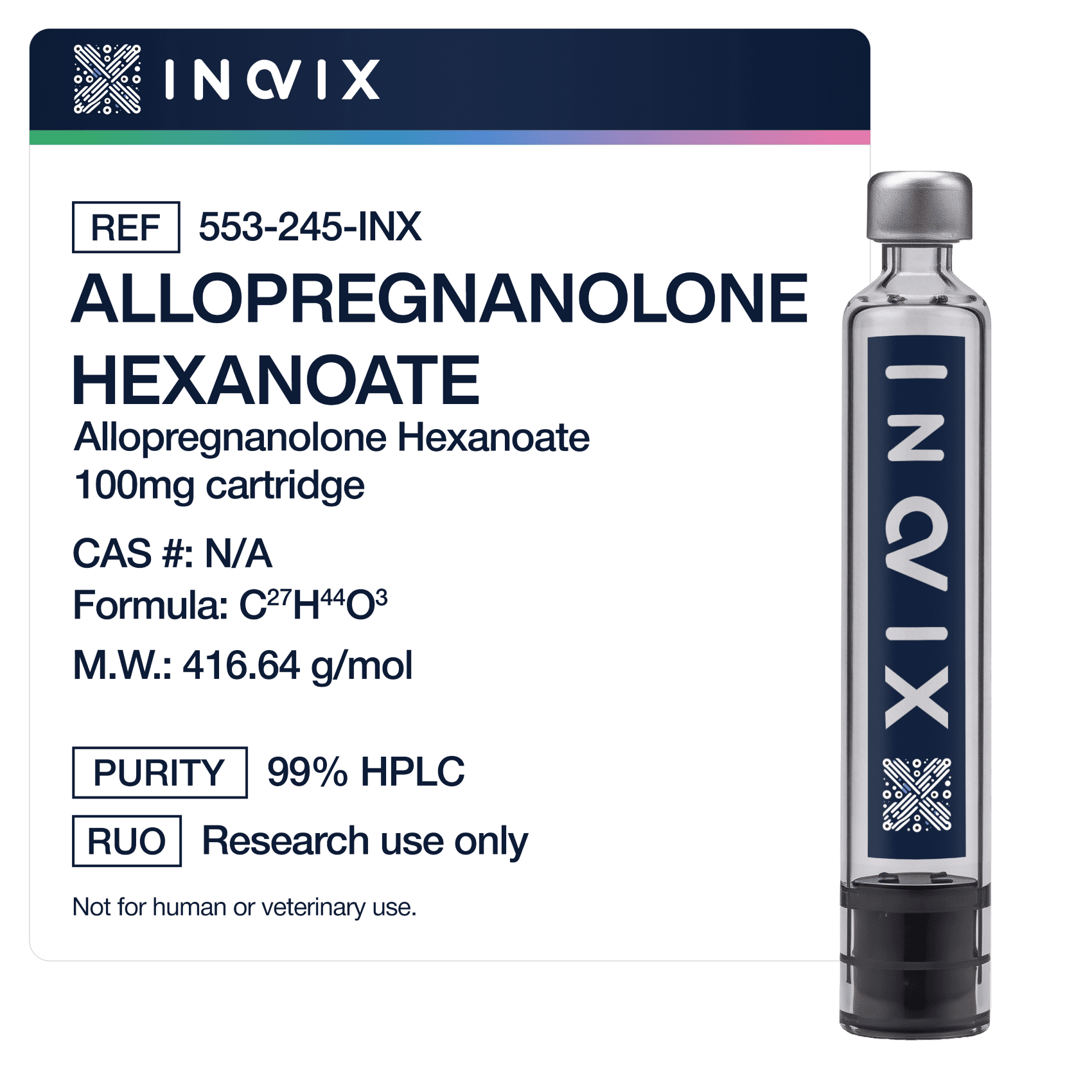
Allopregnanolone Hexanoate
100mg Cartridges
Incl. BTW
Door dit product te bestellen bevestigt u dat u een gekwalificeerde onderzoeker bent en het uitsluitend voor laboratoriumonderzoek zult gebruiken.

Allopregnanolone Hexanoate
100mg Cardridge
| Molecuulformule | C₂₇H₄₄O₃ |
| Molecuulgewicht | 318.49 g/mol |
| CAS-nummer | N/A |
| Fysieke staat | Oplossing in olie |
| Oplosbaarheid | Olie: 100 mg/mL |
| Houdbaarheid | Houdbaarheid: 24 maanden vanaf de ontvangstdatum indien opgeslagen bij kamertemperatuur 20°C |
| Toepassing | Uitsluitend voor in-vitro onderzoek (RUO) |
Allopregnanolone hexanoaat, ook bekend als allopregnanolone caproaat of allopregnanolone 3α-hexanoaat, is een lipofiele esterafgeleide van de endogene neuroactieve steroïde allopregnanolone. Het molecuul combineert het gevestigde neurobiologische platform van allopregnanolone met een zes-koolstof vetzuurester die is ontworpen voor depotlevering, langdurige afgifteonderzoek en gewijzigde farmacokinetische blootstelling. De oudersteroïde allopregnanolone is een van de meest krachtige endogene positieve allosterische modulators van de GABAA_AA receptor. Het onderzoeksprofiel omvat remmende neurotransmissie, stressadaptatie, slaapregulatie, postnatale depressie, angst- en trauma-gerelateerde stoornissen, controle van aanvallen, neurogenese, de ziekte van Alzheimer, de ziekte van Parkinson, traumatisch hersenletsel, bescherming van de bloed-hersenbarrière, neuro-inflammatie, myelinebiologie en lysosomale neurodegeneratie. De directe gepubliceerde farmacologie van de exacte hexanoaatester is aanzienlijk nieuwer dan het ouderplatform van allopregnanolone. De onderzoeksredenering is gebaseerd op ester-gemedieerde lipofiliteit en depotgedrag, gevolgd door enzymatische hydrolyse die de vrije 3α-hydroxylgroep van de oudersteroïde herstelt, die vereist is voor de canonieke interactie van neurosteroïden met de GABAA_AA receptor.
Allopregnanolone Hexanoate: Overview
Allopregnanolone is the endogenous steroid 3α-hydroxy-5α-pregnan-20-one, produced from progesterone through sequential activity of 5α-reductase and 3α-hydroxysteroid dehydrogenase. It is synthesized in peripheral steroidogenic tissues and within the nervous system, where neurons and glial cells can produce neuroactive steroids independently of peripheral endocrine input. [1,7,8]
Allopregnanolone hexanoate is formed by esterification of the parent steroid’s 3α-hydroxyl group with hexanoic acid. Hexanoic acid is also called caproic acid, so the names allopregnanolone hexanoate and allopregnanolone caproate refer to the same ester class.
Masking the hydroxyl group with a six-carbon ester increases the molecule’s lipophilic character and supports incorporation into oil-based or depot-oriented research systems. Following release from the formulation, hydrolysis by esterases can regenerate the parent allopregnanolone molecule. This creates a pro-steroid platform in which the ester primarily controls partitioning, release, and conversion, while the released parent steroid supplies the established neuroactive pharmacology. [3,4]
Allopregnanolone Hexanoate: Structure
Allopregnanolone hexanoate is a non-peptide steroid ester. Amino-acid length and sequence are therefore not applicable.
The structure consists of the tetracyclic 5α-pregnane steroid nucleus, a 20-ketone side chain, and a 3α-O-hexanoyl ester.
Public Chemical Name: Allopregnanolone 3α-hexanoate
Alternative Name: Allopregnanolone caproate
Parent Compound: Allopregnanolone / 3α-hydroxy-5α-pregnan-20-one
Compound Class: Neuroactive steroid ester / lipophilic pro-steroid
Molecular Formula: C27H44O3
Molecular Weight: 416.65 g/mol
Length: Not applicable
Sequence: Not applicable
Public CAS No.: No harmonized public registry entry established for the exact ester
The formula is derived from esterification of allopregnanolone, C21H34O2, with hexanoic acid, C6H12O2, followed by loss of water during ester formation.
Solubility: Allopregnanolone hexanoate is highly lipophilic and is suited to oil-based and organic-solvent research systems. It is expected to have very low aqueous solubility because esterification masks the parent steroid’s only hydrogen-bond-donating hydroxyl group. Exact-material analytical preparations have been formulated in medium-chain triglyceride oil, while organic solvents such as DMSO or ethanol may be used for analytical stock preparation depending on the assay. Final solubility specifications should follow the exact batch COA and validated formulation data. [2–4]
PASTE HERE:
sandbox:/mnt/data/allopregnanolone_hexanoate_structure.pngSource: Stereochemically defined 2D structure of allopregnanolone 3α-hexanoate, generated from the parent allopregnanolone configuration with a 3α-O-hexanoyl substitution.
Allopregnanolone Hexanoate: Ester and Depot Design
Long-chain esterification is a widely used strategy for modifying the delivery profile of lipophilic hormones and other small molecules. The ester group can alter oil solubility, tissue partitioning, crystal dissolution, depot retention, and enzymatic conversion rate. Fatty-acid chain length is one of the principal variables that can be used to tune the release characteristics of a long-acting prodrug. [3,4]
The hexanoate group contains six carbon atoms. It is longer and more lipophilic than an acetate or propionate ester, while being shorter than enanthate, cypionate, undecanoate, or palmitate groups. This gives hexanoate esters an intermediate position within long-chain ester research.
For allopregnanolone, esterification at the 3α-position also creates a clear pharmacological division between the ester and the released parent compound:
The ester controls exposure.
Its lipophilicity and formulation determine partitioning, dissolution, and release from a depot or carrier.
Esterases control conversion.
Hydrolysis removes the hexanoyl group and regenerates the free 3α-hydroxyl.
Parent allopregnanolone supplies canonical neurosteroid activity.
The released steroid can enter the CNS and interact with synaptic and extrasynaptic GABAA_AA receptors.
This structure–function relationship is particularly important because the free 3α-OH is involved directly in allopregnanolone binding to the GABAA_AA receptor. Masking that group reduces compatibility with the canonical neurosteroid-binding geometry until ester hydrolysis occurs. [5,6]
Allopregnanolone: Biosynthesis and Neurosteroid Physiology
Endogenous allopregnanolone is produced from progesterone in two principal steps.
First, 5α-reductase converts progesterone into 5α-dihydroprogesterone. Second, 3α-hydroxysteroid dehydrogenase converts 5α-dihydroprogesterone into allopregnanolone. [7,8]
This pathway operates in several tissues, including:
brain
adrenal gland
gonads
placenta
liver
peripheral nerves
glial cells
Within the nervous system, allopregnanolone is classified as a neurosteroid because it can be synthesized locally and rapidly alter neuronal function through membrane receptors rather than relying exclusively on classical nuclear steroid receptors. [7,8]
Allopregnanolone concentrations change across:
the menstrual cycle
pregnancy
the postpartum transition
acute and chronic stress
sleep deprivation
aging
alcohol exposure
inflammatory and neurodegenerative states
These changes allow allopregnanolone to function as an endogenous regulator of neuronal excitability, emotional reactivity, seizure threshold, sleep, neurogenesis, immune signaling, and stress recovery. [7–12]
PASTE HERE:
https://media.springernature.com/full/springer-static/image/art%3A10.1038%2Fs41467-023-40800-1/MediaObjects/41467_2023_40800_Fig1_HTML.pngSource: Laverty D, et al. Structural and Dynamic Studies of GABAA_AA Receptor Modulation by the Endogenous Neurosteroid Allopregnanolone. Nature Communications. 2023. Figure 1: chemical structures and biosynthetic relationship of progesterone, allopregnanolone, pregnanolone, and related neuroactive steroids. License: CC BY 4.0.
Allopregnanolone: GABA-A Receptor Pharmacology
Allopregnanolone is a potent positive allosteric modulator of GABAA_AA receptors. GABAA_AA receptors are ligand-gated chloride channels that provide the major fast inhibitory signal in the mammalian brain. When GABA binds, chloride conductance generally increases and neuronal excitability is reduced. [5–8]
Allopregnanolone does not compete with GABA at the orthosteric transmitter-binding site. Instead, it binds to transmembrane neurosteroid sites and increases receptor responsiveness to GABA. Depending on concentration, receptor composition, and membrane environment, allopregnanolone can:
increase GABA potency
increase channel-opening probability
prolong inhibitory currents
enhance tonic inhibition
enhance phasic inhibition
directly activate receptors at higher concentrations
reduce network hyperexcitability
This mechanism gives allopregnanolone a different pharmacological profile from benzodiazepines. Benzodiazepines require specific γ-containing receptor configurations and act at the α–γ extracellular interface. Allopregnanolone interacts with transmembrane sites and can modulate a broader range of receptor subtypes, including receptors containing the δ subunit. [5,6,9]
Allopregnanolone: Structural GABA-A Binding Sites
High-resolution structural research has identified neurosteroid-binding sites within the transmembrane domain of GABAA_AA receptors.
One major binding site is located at the interface between the α1 transmembrane domain and the adjacent β3 subunit. The parent allopregnanolone 3α-hydroxyl forms a key hydrogen-bond interaction with α1-Q242, while the steroid carbonyl participates in additional polar interactions deeper in the transmembrane pocket. [5]
This structural finding explains several established medicinal-chemistry observations:
the 3α-hydroxyl configuration is strongly preferred
inversion to a 3β-hydroxyl greatly alters activity
masking the hydroxyl as an ester changes direct receptor compatibility
the rigid steroid nucleus positions the hydroxyl and carbonyl groups precisely
receptor potentiation depends on both stereochemistry and orientation
For allopregnanolone hexanoate, this supports a pro-steroid interpretation: the hexanoate ester provides modified delivery properties, while ester hydrolysis restores the free hydroxyl needed for the parent receptor-binding geometry.
PASTE HERE:
https://media.springernature.com/full/springer-static/image/art%3A10.1038%2Fs41467-023-40800-1/MediaObjects/41467_2023_40800_Fig2_HTML.pngSource: Laverty D, et al. Structural and Dynamic Studies of GABAA_AA Receptor Modulation by the Endogenous Neurosteroid Allopregnanolone. Nature Communications. 2023. Figure 2: cryo-EM neurosteroid-binding sites and allopregnanolone interactions within the GABAA_AA receptor transmembrane domain. License: CC BY 4.0.
Allopregnanolone: Receptor Potentiation and Channel Gating
Structural and molecular-dynamics studies indicate that allopregnanolone stabilizes receptor conformations favorable to channel activation. Neurosteroid binding alters transmembrane-helix packing and strengthens the coupling between GABA binding and pore opening. [5]
Allopregnanolone therefore increases inhibition without replacing the endogenous transmitter. This allows neurosteroid activity to scale with local GABAergic tone and receptor composition.
At low nanomolar concentrations, allopregnanolone primarily potentiates GABA responses. At higher concentrations, it can directly activate certain GABAA_AA receptor populations. The exact response depends on:
receptor subunit composition
synaptic versus extrasynaptic localization
local steroid concentration
phosphorylation state
membrane lipid environment
recent hormone exposure
stress history
PASTE HERE:
https://media.springernature.com/full/springer-static/image/art%3A10.1038%2Fs41467-023-40800-1/MediaObjects/41467_2023_40800_Fig3_HTML.pngSource: Laverty D, et al. Structural and Dynamic Studies of GABAA_AA Receptor Modulation by the Endogenous Neurosteroid Allopregnanolone. Nature Communications. 2023. Figure 3: electrophysiological and structural model of GABAA_AA-receptor potentiation by allopregnanolone. License: CC BY 4.0.
Allopregnanolone: Synaptic and Extrasynaptic Inhibition
GABAA_AA receptors can be broadly divided into synaptic and extrasynaptic populations.
Synaptic receptors generate rapid, phasic inhibitory currents in response to vesicular GABA release. These receptors commonly contain γ subunits.
Extrasynaptic receptors respond to low ambient GABA concentrations and generate persistent tonic inhibition. They frequently contain δ subunits and can be especially sensitive to neuroactive steroids. [8–10]
Allopregnanolone modulates both populations. This is important because tonic inhibition regulates the baseline excitability of entire neuronal networks, while phasic inhibition controls rapid information flow at individual synapses.
Through these combined effects, allopregnanolone can influence:
cortical excitation–inhibition balance
hippocampal network stability
amygdala threat processing
hypothalamic stress regulation
thalamocortical sleep rhythms
seizure threshold
maternal behavior
sensory processing
motor-circuit activity
Allopregnanolone: GABA-A Receptor Plasticity
The biological response to allopregnanolone is influenced not only by steroid concentration but also by receptor plasticity. GABAA_AA receptor subunits change in response to pregnancy, the menstrual cycle, stress, withdrawal, chronic alcohol exposure, and repeated neurosteroid exposure. [9–12]
During pregnancy, circulating progesterone and allopregnanolone rise dramatically. The brain adapts by altering GABAA_AA receptor composition and sensitivity. After delivery, neurosteroid concentrations fall rapidly, requiring another phase of receptor adaptation.
If receptor plasticity does not track the hormone transition appropriately, inhibitory signaling may become unstable. This model is central to research in:
postpartum depression
premenstrual dysphoric disorder
menstrual-cycle-linked anxiety
catamenial epilepsy
hormone-withdrawal states
perimenopausal mood disturbance
The hexanoate ester platform is especially relevant to research that examines whether smoother exposure profiles can influence adaptation differently from rapid fluctuations in parent allopregnanolone.
Allopregnanolone: Depression and Neurosteroid Deficiency
Clinical research has linked reduced allopregnanolone signaling with major depressive disorder and trauma-related illness. Lower cerebrospinal-fluid allopregnanolone concentrations have been reported in unmedicated patients with major depression, with normalization occurring in patients who responded to fluoxetine or fluvoxamine. [13]
These findings helped establish the concept that part of the antidepressant action of certain SSRIs may involve neurosteroidogenesis, independently of serotonin-reuptake inhibition at lower experimental concentrations.
Allopregnanolone biosynthesis has also been linked to:
BDNF regulation
fear extinction
emotional resilience
HPA-axis control
amygdala excitability
inflammatory signaling
GABAergic inhibitory tone
This creates a neurobiological model in which inadequate neurosteroid production or impaired receptor adaptation can contribute to depression, while restoration of allopregnanolone signaling can support rapid changes in emotional-state regulation. [8,13,14]
Allopregnanolone: Postpartum Depression
Pregnancy produces some of the highest physiological allopregnanolone concentrations encountered in humans. After delivery, progesterone and allopregnanolone decline rapidly.
The postpartum period therefore represents a natural neurosteroid-withdrawal state requiring rapid recalibration of GABAA_AA receptors, stress systems, and emotional-processing networks. Research models of postpartum depression emphasize a combination of:
abrupt allopregnanolone withdrawal
impaired GABAA_AA receptor plasticity
altered δ- and γ2-subunit regulation
HPA-axis dysregulation
stress vulnerability
sleep disruption
inflammatory burden
Brexanolone, an intravenous formulation chemically identical to allopregnanolone, provided direct clinical proof that restoring allopregnanolone exposure can produce rapid antidepressant effects in postpartum depression. Phase 2 and phase 3 trials reported clinically meaningful reductions in depression scores during a 60-hour infusion, with effects evident within hours and maintained during follow-up. [15–17]
Brexanolone received FDA approval in 2019. Commercial availability ended in 2025 and the U.S. approval was subsequently withdrawn at the manufacturer’s request, but the clinical program remains a major proof-of-concept for neurosteroid-based antidepressant pharmacology. [17,18]
PASTE HERE:
https://www.frontiersin.org/files/Articles/823616/xml-images/fgwh-03-823616-g0001.webpSource: Pinna G. Allopregnanolone in Postpartum Depression. Frontiers in Global Women’s Health. 2022. Figure 1: risk factors and frequent outcomes associated with major depressive disorder and postpartum depression. License: CC BY 4.0.
Allopregnanolone: Stress, Anxiety, and PTSD
Allopregnanolone rises acutely during many forms of stress and contributes to termination of the stress response. Through GABAA_AA receptor potentiation, it can restrain excessive HPA-axis activation, reduce amygdala hyperexcitability, and support recovery toward baseline after a threat has passed. [8,14,19]
In PTSD research, reduced cerebrospinal-fluid allopregnanolone has been reported in women, with abnormalities linked to impaired conversion of progesterone precursors through the neurosteroidogenic pathway. Sex-dependent differences in 5α-reductase and 3α-hydroxysteroid dehydrogenase activity have also been investigated. [14]
Preclinical neurosteroid-deficiency models show:
increased anxiety-like behavior
exaggerated aggression
impaired fear extinction
exaggerated startle
social-withdrawal behavior
altered BDNF expression
reduced stress resilience
Restoration of allopregnanolone signaling can reverse several of these phenotypes in experimental models. This supports research into allopregnanolone and its long-acting derivatives for stress adaptation, trauma-associated circuitry, and emotional resilience. [8,14,19]
Allopregnanolone: Sleep and EEG Regulation
Allopregnanolone influences sleep through GABAA_AA-receptor-mediated modulation of thalamocortical and hypothalamic circuits.
In controlled rodent EEG studies, allopregnanolone:
reduced latency to non-REM sleep
altered non-REM EEG power
increased higher-frequency activity during non-REM sleep
changed REM-associated spectral activity
increased transitional pre-REM states
produced benzodiazepine-like sleep effects without identical receptor pharmacology
Subchronic studies reported persistence of several sleep-architecture effects over repeated administration, indicating that tolerance patterns may differ from some conventional sedative-hypnotics. [20,21]
Endogenous allopregnanolone also changes during sleep deprivation and stress. Low brain allopregnanolone has been associated with flattened circadian activity and sleep-dependent memory impairment in aged animal models. [22]
For hexanoate research, sustained-release exposure offers a platform for studying whether slower neurosteroid delivery produces different effects on:
sleep onset
sleep maintenance
EEG spectral power
circadian behavior
next-day arousal
neurosteroid tolerance
tonic inhibition
Allopregnanolone: Seizure and Status-Epilepticus Research
Allopregnanolone has broad anticonvulsant activity in preclinical seizure models. Its ability to potentiate both synaptic and extrasynaptic GABAA_AA receptors is particularly relevant to status epilepticus, where synaptic GABAA_AA receptors may internalize during prolonged seizure activity while extrasynaptic receptors remain available. [23]
Allopregnanolone has demonstrated activity in models involving:
pentylenetetrazol
bicuculline
pilocarpine
kainate
kindling
organophosphate-induced status epilepticus
refractory seizure states
Clinical case series evaluated intravenous allopregnanolone in pediatric and adult super-refractory status epilepticus. In several cases, treatment supported withdrawal of continuous anesthetic infusions and resolution of prolonged seizure activity. [23–25]
The combination of rapid CNS penetration, extrasynaptic receptor activity, and potent neurosteroid modulation makes the allopregnanolone platform important in research on refractory hyperexcitability and seizure termination.
Allopregnanolone: Neurogenesis and Alzheimer’s Disease
Allopregnanolone has a distinct research profile as both a GABAergic neurosteroid and a neuroregenerative signaling molecule.
In neural progenitor cells, allopregnanolone can stimulate proliferation through a sequence involving:
GABAA_AA-receptor modulation
membrane depolarization in immature neural progenitors
opening of L-type calcium channels
increased intracellular calcium
activation of CREB and cell-cycle signaling
induction of neurogenic and differentiation markers
Allopregnanolone increased proliferation of rodent hippocampal progenitors and human cortical neural stem cells in vitro. In Alzheimer’s disease mouse models, intermittent treatment increased hippocampal neurogenesis, improved learning and memory, and reduced amyloid-associated pathology. [26–29]
An important feature of this research is dosing periodicity. Intermittent exposure was often more favorable than continuous exposure for neuroregenerative endpoints, reflecting the need for time between proliferative activation and neuronal differentiation.
PASTE HERE:
https://journals.plos.org/plosone/article/figure/image?size=large&id=10.1371/journal.pone.0128313.g003Source: Irwin RW, Solinsky CM, Loya CM, et al. Allopregnanolone Preclinical Acute Pharmacokinetic and Pharmacodynamic Studies to Predict Tolerability and Efficacy for Alzheimer’s Disease. PLOS ONE. 2015. Figure 3: dose- and route-dependent induction of hippocampal neurogenesis and neuronal differentiation markers. License: CC BY.
Allopregnanolone: CNS Pharmacokinetics and Brain Exposure
Allopregnanolone is highly lipophilic and readily enters the brain. Preclinical pharmacokinetic studies found rapid brain exposure after intravenous administration and brain-to-plasma ratios greater than one under several delivery conditions. [28]
Research compared:
intravenous administration
subcutaneous suspension
intramuscular delivery
transdermal delivery
intranasal delivery
cyclodextrin-based formulations
The parent compound has low intrinsic water solubility, making formulation a major translational challenge. Cyclodextrin formulations were developed to create injectable aqueous preparations, while lipophilic formulations were investigated for transdermal, intranasal, and depot-oriented delivery. [28]
PASTE HERE:
https://journals.plos.org/plosone/article/figure/image?size=large&id=10.1371/journal.pone.0128313.g001Source: Irwin RW, Solinsky CM, Loya CM, et al. Allopregnanolone Preclinical Acute Pharmacokinetic and Pharmacodynamic Studies to Predict Tolerability and Efficacy for Alzheimer’s Disease. PLOS ONE. 2015. Figure 1: plasma and brain pharmacokinetics after intravenous, subcutaneous, and transdermal allopregnanolone administration. License: CC BY.
The hexanoate ester represents a different formulation strategy: instead of increasing water compatibility, it increases lipophilic depot behavior and relies on subsequent hydrolysis to release parent allopregnanolone.
Allopregnanolone: Clinical Alzheimer’s Research
A phase 1b/2a clinical program evaluated once-weekly intravenous allopregnanolone in participants with mild cognitive impairment due to Alzheimer’s disease or mild Alzheimer’s dementia.
The program focused primarily on:
safety
tolerability
pharmacokinetics
maximum tolerated exposure
sedation monitoring
exploratory MRI outcomes
hippocampal volume
white-matter and connectivity measures
Exploratory imaging analyses reported treatment-associated patterns in hippocampal-volume change that varied by sex and APOE genotype. The study was not powered to establish cognitive efficacy, but it demonstrated that repeated allopregnanolone administration could be investigated in older adults with early Alzheimer’s disease. [29,30]
The broader Alzheimer’s research platform includes:
neural progenitor proliferation
oligodendrocyte generation
hippocampal neurogenesis
CREB activation
NeuroD induction
reduced amyloid burden
reduced microglial activation
restoration of learning and memory in transgenic models
Allopregnanolone: Parkinson’s Disease and Nigrostriatal Regeneration
Allopregnanolone has been investigated in the MPTP mouse model of Parkinson’s disease, where dopaminergic neurons are damaged within the substantia nigra and striatum.
In these studies, allopregnanolone treatment was associated with:
increased BrdU-positive cells in the substantia nigra
increased expression of dopaminergic markers
restoration of tyrosine hydroxylase-positive neurons
increased striatal dopaminergic fiber density
improved motor performance
increased growth-factor expression
These findings support a research model in which allopregnanolone acts not only as an acute inhibitory neurosteroid but also as a neurotrophic and regenerative signal within the nigrostriatal system. [31,32]
PASTE HERE:
https://journals.plos.org/plosone/article/figure/image?size=large&id=10.1371/journal.pone.0050040.g001Source: Adeosun SO, Hou X, Jiao Y, et al. Allopregnanolone Reinstates Tyrosine Hydroxylase Immunoreactive Neurons and Motor Performance in an MPTP-Lesioned Mouse Model of Parkinson’s Disease. PLOS ONE. 2012. Figure 1: experimental design, motor performance, and neurogenic responses after allopregnanolone treatment. License: CC BY.
PASTE HERE:
https://journals.plos.org/plosone/article/figure/image?size=large&id=10.1371/journal.pone.0050040.g003Source: Adeosun SO, Hou X, Jiao Y, et al. Allopregnanolone Reinstates Tyrosine Hydroxylase Immunoreactive Neurons and Motor Performance in an MPTP-Lesioned Mouse Model of Parkinson’s Disease. PLOS ONE. 2012. Figure 3: restoration of tyrosine-hydroxylase-positive neurons in substantia nigra. License: CC BY.
A registered pilot clinical study is also evaluating intravenous allopregnanolone as a regenerative treatment in Parkinson’s disease, extending the platform from animal neuroregeneration into early human translation. [33]
Allopregnanolone: Traumatic Brain Injury
Allopregnanolone has demonstrated neuroprotective activity in preclinical traumatic brain injury models.
Reported effects include:
reduced neuronal death
reduced reactive gliosis
improved behavioral recovery
lower inflammatory cytokine expression
reduced cerebral edema
preservation of blood–brain barrier integrity
altered coagulation and hemostatic responses
improved spatial learning
Allopregnanolone and progesterone both influence post-injury recovery, but their mechanisms are not identical. Progesterone acts through classical progesterone receptors and can also serve as a precursor to allopregnanolone. Allopregnanolone acts predominantly through membrane GABAA_AA receptors and related neuroimmune pathways. [34–36]
These data support allopregnanolone research in conditions where acute excitotoxicity, inflammation, oxidative stress, BBB disruption, and secondary neuronal loss occur together.
Allopregnanolone: Stroke and Blood–Brain Barrier Protection
In experimental focal ischemia, allopregnanolone has been reported to reduce blood–brain barrier dysfunction by suppressing MMP-2 and MMP-9, preserving the tight-junction proteins occludin and claudin-5, and reducing vascular leakage. [36]
Additional models have reported:
reduced infarct volume
improved long-term cognitive outcomes
reduced inflammatory signaling
reduced apoptosis
preserved microvascular integrity
The stroke literature is model-dependent, and results have varied across species, injury protocols, temperature control, dose, and timing. The strongest mechanistic signal concerns BBB stabilization, inflammatory regulation, and neuronal protection rather than one universally reproducible infarct-size effect.
Allopregnanolone: Myelin, Oligodendrocytes, and Multiple Sclerosis
Allopregnanolone influences both central and peripheral myelin biology.
In oligodendrocytes and organotypic brain cultures, allopregnanolone has been associated with increased expression of:
myelin basic protein
peripheral myelin protein 22
myelin protein zero
oligodendrocyte-survival pathways
Allopregnanolone also protects oligodendrocytes from inflammatory and cytotoxic injury. [37–39]
In multiple sclerosis research, reduced allopregnanolone and reduced expression of neurosteroidogenic enzymes have been reported in diseased white matter. In experimental autoimmune encephalomyelitis, allopregnanolone treatment reduced disease severity, myelin damage, axonal injury, lymphocyte infiltration, and monocyte/microglial activation. [37]
PASTE HERE:
https://www.frontiersin.org/files/Articles/91506/xml-images/fncel-08-00134-g0001.webpSource: Noorbakhsh F, Ellestad KK, Maingat F, et al. Allopregnanolone and Neuroinflammation: A Focus on Multiple Sclerosis. Frontiers in Cellular Neuroscience. 2014. Figure 1: effects of allopregnanolone on neurons, oligodendrocytes, macrophages, microglia, lymphocytes, and blood–brain barrier function. License: CC BY.
Allopregnanolone: Neuroinflammation
Allopregnanolone can influence inflammatory signaling through GABAA_AA receptors expressed on non-neuronal cells.
Functional GABAA_AA receptors have been identified on:
macrophages
microglia
lymphocytes
oligodendrocytes
astrocytes
endothelial-associated cells
Allopregnanolone has been reported to reduce:
TNF-α production
IL-1β expression
nitric-oxide production by activated microglia
IDO expression
microglial activation
macrophage inflammatory signaling
leukocyte-associated BBB disruption
This creates a combined neuroinhibitory and neuroimmune profile: allopregnanolone can reduce neuronal hyperexcitability while simultaneously modifying the inflammatory environment surrounding neurons and glial cells. [37,39]
Allopregnanolone: Niemann–Pick Type C Research
Niemann–Pick type C disease is associated with impaired cholesterol trafficking, progressive neurodegeneration, and disrupted neurosteroidogenesis.
Research in NPC models identified reduced allopregnanolone synthesis early in disease development. Administration of allopregnanolone improved survival, delayed neurological impairment, preserved Purkinje neurons, and reduced abnormal lipid accumulation in preclinical models. [40,41]
Later work linked allopregnanolone treatment with:
delayed cholesterol accumulation
improved autophagic and lysosomal function
altered microglial activation
improved neuronal survival
delayed motor decline
This research was among the earliest demonstrations that neurosteroid deficiency could contribute directly to a neurodegenerative disease phenotype and that replacement could alter disease progression.
Allopregnanolone: Alcohol and Addiction Biology
Alcohol and allopregnanolone interact bidirectionally.
Acute alcohol exposure can increase neurosteroid synthesis in some experimental systems, contributing to the sedative, anxiolytic, anticonvulsant, and behavioral effects of alcohol. Chronic alcohol exposure and withdrawal can reduce neurosteroid production, alter GABAA_AA receptor composition, and increase stress-system activity. [42,43]
Allopregnanolone has been studied in relation to:
alcohol intake
alcohol reinforcement
withdrawal anxiety
stress-induced drinking
aggression
GABAA_AA receptor adaptation
neuroimmune activation
epigenetic control of steroidogenic enzymes
The relationship is dose- and region-dependent. Intrahippocampal allopregnanolone reduced voluntary ethanol consumption in one model, while other exposure conditions produced different effects on consummatory behavior. [42,43]
The hexanoate ester platform may be useful for research into how sustained neurosteroid exposure differs from the rapid fluctuations produced by acute alcohol or short-acting allopregnanolone.
Allopregnanolone: PMDD and Hormone Sensitivity
Premenstrual dysphoric disorder is not necessarily characterized by abnormal absolute allopregnanolone concentrations. A major research model instead focuses on abnormal sensitivity to normal allopregnanolone fluctuations and altered GABAA_AA receptor plasticity. [44,45]
Some individuals show paradoxical negative mood responses at intermediate allopregnanolone concentrations, including:
irritability
anxiety
dysphoria
aggression
increased amygdala activity
The relationship may follow an inverted-U pattern, with low and high concentrations producing different effects from intermediate luteal-phase concentrations.
This phenomenon is linked to changes in:
α4-containing GABAA_AA receptors
δ-containing extrasynaptic receptors
receptor sensitivity
menstrual-cycle hormone withdrawal
amygdala and prefrontal-cortex activity
The PMDD literature emphasizes that response to allopregnanolone depends strongly on exposure dynamics and receptor adaptation, not simply on whether concentrations are high or low. [44,45]
This makes sustained-release ester research particularly relevant to questions involving rate of rise, rate of decline, exposure stability, and receptor adaptation.
Allopregnanolone: Peripheral Nerve and Neuropathic Research
Allopregnanolone also participates in peripheral nervous system biology.
Schwann cells express GABAA_AA receptors and steroidogenic enzymes. Allopregnanolone has been linked to expression of peripheral myelin proteins including P0 and PMP22, supporting a role in Schwann-cell differentiation and myelin maintenance. [38,39]
Neuroactive-steroid research has also examined allopregnanolone in:
diabetic neuropathy
chemotherapy-related neuropathy
peripheral nerve injury
pain sensitization
spinal-cord injury
myelin repair
These findings extend the allopregnanolone platform beyond cortical inhibition into peripheral nerve structure, myelin protein regulation, and sensory signaling.
Allopregnanolone Hexanoate: Formulation and Analytical Research
The hexanoate ester is especially suited to studies in which the research objective is to separate delivery kinetics from parent neurosteroid pharmacology.
Relevant analytical parameters include:
Chemical identity
Confirmation of the steroid nucleus, 3α-O-hexanoyl ester, and stereochemistry.
Molecular mass
Expected molecular mass of approximately 416.65 g/mol.
Ester purity
HPLC or GC analysis should distinguish intact ester from parent allopregnanolone, free hexanoic acid, positional isomers, oxidation products, and synthetic intermediates.
NMR confirmation
Proton and carbon NMR can confirm ester formation, steroid stereochemistry, and the hexanoyl chain.
Parent-steroid release
In vitro plasma, serum, microsomal, or tissue-homogenate assays can quantify conversion to allopregnanolone.
Depot dissolution
Oil composition, ester concentration, viscosity, crystal form, and water–oil partitioning can strongly influence release.
Stability
Temperature, light, oxygen, moisture, and residual acid can influence steroid-ester stability.
Bioanalytical separation
LC–MS/MS methods should measure intact allopregnanolone hexanoate and released allopregnanolone independently.
Allopregnanolone Hexanoate: Research Positioning
Allopregnanolone hexanoate is best positioned as a long-acting neurosteroid prodrug and depot-research platform.
Its principal research applications include:
Extended Neurosteroid Exposure
The ester can be used to investigate how slower allopregnanolone appearance affects GABAergic signaling compared with rapid intravenous, intranasal, or unesterified administration.
Mood and Stress Adaptation
The platform is relevant to sustained neurosteroid signaling in depression, trauma-related disorders, postpartum-hormone withdrawal, and HPA-axis regulation.
Sleep Architecture
Longer exposure can be studied in relation to sleep onset, sleep continuity, EEG signatures, and circadian adaptation.
Seizure Threshold
The parent compound’s activity at synaptic and extrasynaptic GABAA_AA receptors supports research into prolonged anticonvulsant neurosteroid exposure.
Neuroregeneration
The parent platform supports research into hippocampal neurogenesis, oligodendrocyte generation, CREB activation, NeuroD signaling, and regenerative CNS responses.
Neurodegenerative Disease
The research platform extends into Alzheimer’s disease, Parkinson’s disease, Niemann–Pick type C, multiple sclerosis, and other conditions involving impaired neurosteroidogenesis.
Neuroinflammation and Myelin
Allopregnanolone influences macrophages, microglia, oligodendrocytes, BBB integrity, and myelin-associated gene expression.
Formulation Science
The ester is suitable for research into fatty-acid-chain length, oil-depot behavior, esterase hydrolysis, sustained release, and parent-steroid liberation.
Allopregnanolone Hexanoate: Summary
Allopregnanolone hexanoate is the 3α-O-hexanoyl ester of allopregnanolone, combining a six-carbon fatty-acid promoiety with one of the most extensively studied endogenous neuroactive steroids.
Its design separates delivery from pharmacology:
The hexanoate ester provides lipophilicity, oil compatibility, and depot-oriented release behavior.
Ester hydrolysis restores the free 3α-hydroxyl group.
Released allopregnanolone supplies potent synaptic and extrasynaptic GABAA_AA-receptor modulation.
The broader allopregnanolone research platform includes sleep regulation, stress adaptation, postpartum depression, PTSD, seizure control, neurogenesis, Alzheimer’s disease, Parkinson’s disease, traumatic brain injury, BBB protection, myelin biology, multiple sclerosis, neuroinflammation, and lysosomal neurodegeneration. [1–45]
This makes allopregnanolone hexanoate a highly distinctive research compound for programs centered on sustained neurosteroid exposure, depot pharmacology, GABAergic regulation, neuroprotection, neuroregeneration, and CNS recovery biology.
Selected References
PubChem. Allopregnanolone compound entry, CID 9883500. Chemical structure, formula, molecular weight, identifiers, and stereochemistry.
5AR Society. Allopregnanolone Caproate. Exact-material product description and proton-NMR identity documentation.
Chien ST, et al. Prodrug Approaches for the Development of a Long-Acting Drug Delivery System. 2023.
Laverty D, et al. Structural and Dynamic Studies of GABAA_AA Receptor Modulation by the Endogenous Neurosteroid Allopregnanolone. Nature Communications. 2023.
Diviccaro S, et al. Allopregnanolone: An Overview on Its Synthesis and Effects. Journal of Neuroendocrinology / open-access review. 2021.
Melcangi RC, et al. Allopregnanolone: State of the Art. Progress in Neurobiology. 2014.
Boero G, et al. Pleiotropic Actions of Allopregnanolone Underlie Therapeutic Benefits in Stress-Related Disease. Neurobiology of Stress. 2019.
Pinna G. Allopregnanolone in Postpartum Depression. Frontiers in Global Women’s Health. 2022.
Walton N, Maguire J. Allopregnanolone-Based Treatments for Postpartum Depression: Why and How Do They Work? Neurobiology of Stress. 2019.
Maguire J, Mody I. GABAA_AA Receptor Plasticity During Pregnancy: Relevance to Postpartum Depression. Neuron. 2008.
Uzunova V, et al. Increase in the Cerebrospinal Fluid Content of Neurosteroids in Patients with Unipolar Major Depression Receiving Fluoxetine or Fluvoxamine. Proceedings of the National Academy of Sciences. 1998.
Rasmusson AM, et al. Decreased Cerebrospinal Fluid Allopregnanolone Levels in Women with Posttraumatic Stress Disorder. Biological Psychiatry. 2006.
Kanes S, et al. Brexanolone for the Treatment of Severe Postpartum Depression: A Randomised Controlled Trial. Lancet. 2017.
Meltzer-Brody S, et al. Brexanolone Injection in Post-Partum Depression: Two Multicentre, Double-Blind, Randomised, Placebo-Controlled Phase 3 Trials. Lancet. 2018.
FDA. ZULRESSO (Brexanolone) Prescribing Information. Historical clinical pharmacology, efficacy, safety, and REMS information.
American College of Obstetricians and Gynecologists. Zuranolone and Brexanolone for the Treatment of Postpartum Depression. 2025–2026 update noting commercial discontinuation and withdrawal of the brexanolone approval.
Lancel M, Faulhaber J, Schiffelholz T, Romeo E, Di Michele F, Holsboer F, Rupprecht R. Allopregnanolone Affects Sleep in a Benzodiazepine-Like Fashion. Journal of Pharmacology and Experimental Therapeutics. 1997.
Damianisch K, Rupprecht R, Lancel M. The Influence of Subchronic Administration of the Neurosteroid Allopregnanolone on Sleep in the Rat. Neuropsychopharmacology. 2001.
George O, et al. Low Brain Allopregnanolone Levels Mediate Flattened Circadian Activity and Memory Deficits in Aged Rats. 2010.
Rogawski MA, et al. Neuroactive Steroids for the Treatment of Status Epilepticus. Epilepsia. 2013.
Broomall E, et al. Pediatric Super-Refractory Status Epilepticus Treated with Allopregnanolone. Annals of Neurology. 2014.
Vaitkevicius H, et al. First-in-Man Allopregnanolone Use in Super-Refractory Status Epilepticus. Annals of Clinical and Translational Neurology. 2017.
Wang JM, et al. The Neurosteroid Allopregnanolone Promotes Proliferation of Rodent and Human Neural Progenitor Cells and Regulates Cell-Cycle Gene Expression. Journal of Neuroscience. 2005.
Wang JM, et al. Allopregnanolone Reverses Neurogenic and Cognitive Deficits in Mouse Model of Alzheimer’s Disease. Proceedings of the National Academy of Sciences. 2010.
Irwin RW, Solinsky CM, Loya CM, et al. Allopregnanolone Preclinical Acute Pharmacokinetic and Pharmacodynamic Studies to Predict Tolerability and Efficacy for Alzheimer’s Disease. PLOS ONE. 2015.
Raikes AC, et al. Exploratory Imaging Outcomes of a Phase 1b/2a Clinical Trial of Allopregnanolone as a Regenerative Therapeutic for Alzheimer’s Disease. Alzheimer’s & Dementia: Translational Research & Clinical Interventions. 2022.
Hernandez GD, et al. Allopregnanolone: Regenerative Therapeutic to Restore Neurological Health. 2022.
Adeosun SO, et al. Allopregnanolone Reinstates Tyrosine Hydroxylase Immunoreactive Neurons and Motor Performance in an MPTP-Lesioned Mouse Model of Parkinson’s Disease. PLOS ONE. 2012.
Wang JM. Allopregnanolone and Neurogenesis in the Nigrostriatal Tract. Frontiers in Cellular Neuroscience. 2014.
ClinicalTrials.gov. Allopregnanolone as a Regenerative Treatment in Patients with Parkinson’s Disease. NCT06263010.
He J, Hoffman SW, Stein DG. Allopregnanolone, a Progesterone Metabolite, Enhances Behavioral Recovery and Decreases Neuronal Loss after Traumatic Brain Injury. Restorative Neurology and Neuroscience. 2004.
Djebaili M, et al. The Neurosteroids Progesterone and Allopregnanolone Reduce Cell Death, Gliosis, and Functional Deficits after Traumatic Brain Injury in Rats. Journal of Neurotrauma. 2005.
Ishrat T, Sayeed I, Atif F, Hua F, Stein DG. Progesterone and Allopregnanolone Attenuate Blood–Brain Barrier Dysfunction Following Permanent Focal Ischemia by Regulating Matrix Metalloproteinases. Experimental Neurology. 2010.
Noorbakhsh F, et al. Impaired Neurosteroid Synthesis in Multiple Sclerosis. Brain. 2011.
Noorbakhsh F, Ellestad KK, Maingat F, et al. Allopregnanolone and Neuroinflammation: A Focus on Multiple Sclerosis. Frontiers in Cellular Neuroscience. 2014.
Ghoumari AM, et al. Progesterone and Its Metabolites Increase Myelin Basic Protein Expression in Organotypic Slice Cultures of Rat Cerebellum. Journal of Neurochemistry. 2003.
Melcangi RC, et al. Progesterone Derivatives Influence Peripheral Myelin Protein 22 and P0 Gene Expression. Journal of Neuroscience Research. 1999.
Griffin LD, Gong W, Verot L, Mellon SH. Niemann–Pick Type C Disease Involves Disrupted Neurosteroidogenesis and Responds to Allopregnanolone. Nature Medicine. 2004.
Liao G, et al. Allopregnanolone Treatment Delays Cholesterol Accumulation and Reduces Autophagic Dysfunction in Niemann–Pick Type C Disease. 2009.
Morrow AL, et al. A Rationale for Allopregnanolone Treatment of Alcohol Use Disorder. Neurobiology of Stress. 2020.
Gatta E, et al. Neurosteroids, Allopregnanolone, and Alcohol Use Disorder. 2022.
Hantsoo L, Epperson CN. Allopregnanolone in Premenstrual Dysphoric Disorder. International Review of Psychiatry. 2020.
Bäckström T, et al. Allopregnanolone and Mood Disorders. Progress in Neurobiology. 2014.
Bixo M, et al. Effects of GABA-Active Steroids in the Female Brain with a Focus on Premenstrual Dysphoric Disorder. Journal of Neuroendocrinology. 2018.
FDA / Clinical Development Records. Allopregnanolone and Neuroactive-Steroid Translational Programs in Postpartum Depression, Alzheimer’s Disease, Parkinson’s Disease, and Status Epilepticus.
18°C tot 25°C
Bewaartemperatuur
Houdbaarheid: 24 maanden vanaf de ontvangstdatum indien opgeslagen bij kamertemperatuur 20°C
Houdbaarheid
Olie: 100 mg/mL
Oplosbaarheid
Voor uw onderzoek
Kennisbank: Allopregnanolone Hexanoate
Eigenschappen, analyse, reconstitutie en veelgestelde vragen over Allopregnanolone Hexanoate op één referentiepagina.
Lees meerKwaliteit en analyse
Hoe elke batch wordt getest: HPLC-zuiverheid, LC-MS-identiteit en onafhankelijke verificatie.
Lees meerReconstitutiecalculator
Bereken de concentratie van uw stamoplossing in mg/mL.
Lees meerOplosbaarheid en opslag
Oplosmiddelen, opslagtemperaturen en houdbaarheid van alle verbindingen in één tabel.
Lees meerVerzonden vanuit Nederland
DHL Parcel vanuit Nederland
Elke bestelling wordt vanuit Nederland verzonden met DHL Parcel, met track & trace tot aflevering. Levering in Nederland: 1 tot 2 werkdagen.
Geen douane binnen de EU
Uw pakket blijft binnen de EU-binnenmarkt. Voor EU-bestemmingen is er geen douanecontrole, geen invoer-BTW en geen inklaringskosten bij aflevering.
Prijzen in euro, incl. BTW
Alle prijzen zijn in euro en inclusief BTW. Binnen de EU komen er achteraf geen invoerkosten of extra heffingen bij.
Verzendkosten per land
- Nederland€ 6,95gratis vanaf € 75,00
- België€ 10,95gratis vanaf € 75,00
- Duitsland€ 13,95gratis vanaf € 75,00
- Frankrijk€ 15,95gratis vanaf € 250,00
- Verenigd Koninkrijk€ 18,95gratis vanaf € 250,00
- Italië€ 20,95gratis vanaf € 250,00
- Spanje€ 22,95gratis vanaf € 250,00
- Denemarken€ 28,95gratis vanaf € 250,00
- Zweden€ 29,95gratis vanaf € 250,00
Dezelfde DHL-tarieven die u bij het afrekenen ziet.
Veelgestelde vragen
Wat is Allopregnanolone Hexanoate?+
100mg Cartridges. Allopregnanolone Hexanoate is uitsluitend bestemd voor in-vitro laboratoriumonderzoek (research use only) en is niet bedoeld voor menselijke of veterinaire toepassing.
Kan ik Allopregnanolone Hexanoate kopen voor onderzoek?+
Ja, Allopregnanolone Hexanoate is online te bestellen voor laboratoriumonderzoek. Bestellen is voorbehouden aan gekwalificeerde onderzoekers: bij het plaatsen van een bestelling bevestigt u dat het product uitsluitend voor onderzoeksdoeleinden wordt gebruikt. Inovix levert binnen Europa.
Hoe reconstitueer ik Allopregnanolone Hexanoate?+
Reconstitueer Allopregnanolone Hexanoate volgens de oplosbaarheidsspecificatie: Olie: 100 mg/mL. Bereken met de reconstitutie-calculator hoeveel oplosmiddel nodig is voor een gewenste concentratie in mg/ml.
Naar de reconstitutie-calculatorOplosbaarheids- en opslagtabel
Hoe moet ik Allopregnanolone Hexanoate bewaren?+
Aanbevolen bewaarcondities voor Allopregnanolone Hexanoate: 18°C tot 25°C. Houdbaarheid: Houdbaarheid: 24 maanden vanaf de ontvangstdatum indien opgeslagen bij kamertemperatuur 20°C.
Wordt Allopregnanolone Hexanoate binnen Europa verzonden?+
Ja. Inovix verzendt vanuit Nederland met DHL naar negen Europese landen, waaronder Nederland, België en Duitsland. Elke zending heeft track & trace tot aflevering.
Is Inovix een betrouwbare Europese leverancier van onderzoekspeptiden?+
Inovix is een Nederlandse leverancier van producten voor laboratoriumonderzoek. Analyses worden uitgevoerd door onafhankelijke laboratoria in de EU en het certificaat van analyse is per product te downloaden waar vermeld. Verzending gebeurt vanuit Nederland met track & trace.